The Future of Gaming: Blockchain Integration Trends to Watch
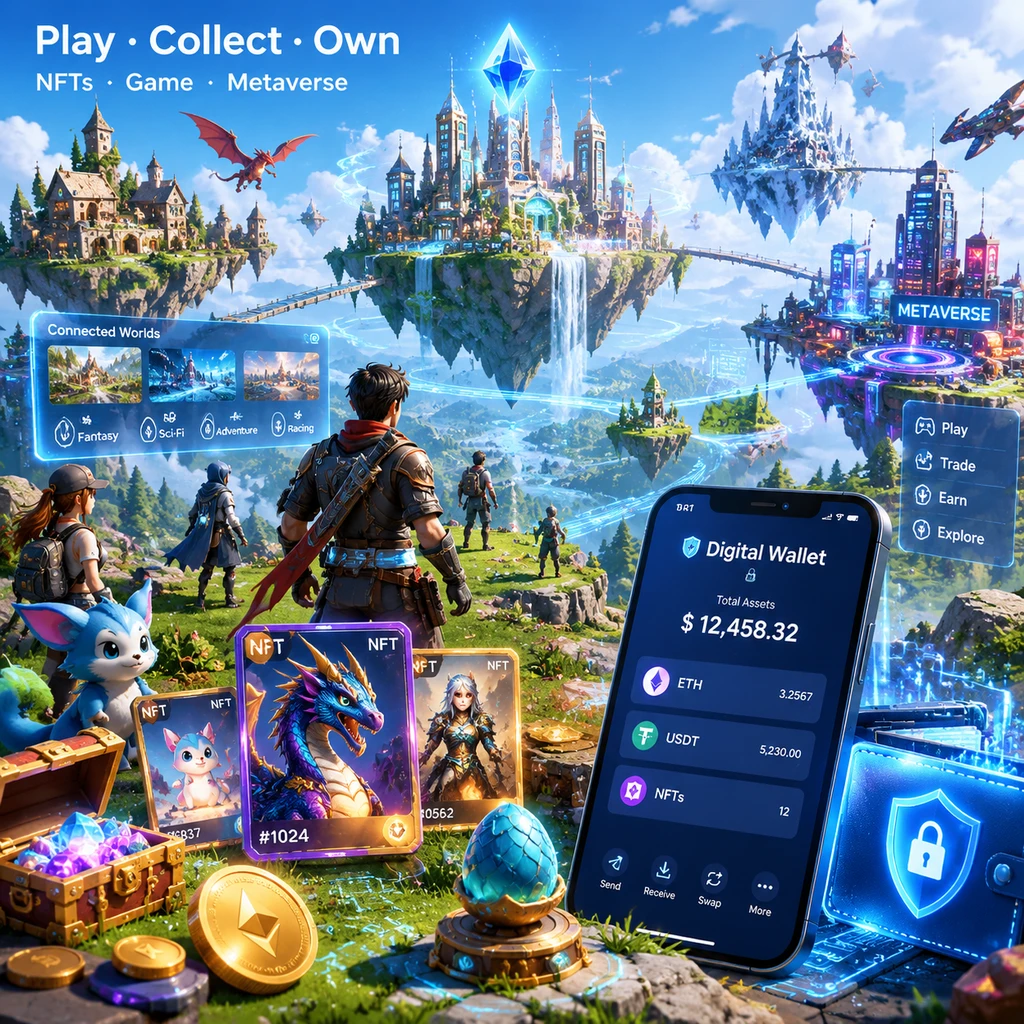
Blockchain integration could change how games handle digital items, transactions, and player ownership. For NFT and play-to-earn games, the opportunity is real, but so are the design challenges: a tradable asset has little value if the game around it is frustrating, insecure, or financially unsustainable.
The most useful way to assess blockchain gaming is to ask what it improves for players. Clear ownership, optional trading, and transparent rules may help in some games. Token rewards and NFTs alone cannot guarantee a better experience, and blockchain is unlikely to replace traditional game technology across the board.
What Blockchain Integration Means for Gaming
Blockchain integration lets a game record selected assets or transactions on a shared digital ledger. This can support verifiable ownership and transfers, while the game itself still handles most gameplay, graphics, and player interactions.
In a conventional game, an item such as a character skin is usually controlled by the publisher’s account system. A blockchain game may represent an item as a token linked to a player’s wallet. Depending on the game’s rules, the player may be able to hold, sell, or transfer that asset outside the game’s internal marketplace.
That distinction does not mean players own every part of an item. The token may prove control of a digital record, while the game’s terms and servers determine whether the item can be used, what artwork or features it represents, and whether the game remains available. Digital asset ownership has practical limits when access depends on a developer-operated service.
Blockchain can also make some transactions easier to verify. Smart contracts, which are programs that run on a blockchain, can enforce rules for transfers or marketplace fees. However, they cannot guarantee that an item will retain value or that a transaction is reversible if something goes wrong.
NFTs and the Evolution of Digital Ownership
NFTs are unique blockchain tokens that can represent specific digital items, such as a collectible, character, or piece of equipment. In games, they may give players a way to hold or trade certain assets, but they do not automatically make those assets usable everywhere.
A game might issue an NFT for a limited-edition cosmetic, a tournament trophy, or a player-created item. Some NFTs can be used directly in gameplay; others serve mainly as collectibles. The distinction matters. A tradable skin that looks appealing and works reliably may have more player value than a token whose only selling point is scarcity.
Interoperability is often presented as a major benefit: an item earned in one game could appear in another. In practice, the receiving game would need to support the asset’s format, balance, visual design, and rights. A powerful sword from one game may not fit the combat system of another. Developers also need to agree on technical standards and decide who is responsible for moderation, updates, and intellectual property.
For players, a sensible NFT check is straightforward: ask whether the item is useful or meaningful without resale, whether it can be withdrawn from the game, and what happens if the publisher changes its rules. Transferability is a feature, not a promise of permanent utility.
Beyond Play-to-Earn: Designing Sustainable Game Economies
Sustainable blockchain games need enjoyable gameplay and balanced in-game economies; rewards should support the experience rather than become its main reason to play. This is a shift from early play-to-earn models that often emphasized token payouts and asset prices.
In a play-to-earn (P2E) game, players may receive tokens or NFTs for completing quests, competing, or contributing to the game. Those rewards can create new ways to participate, but they also introduce economic pressure. If new tokens enter the economy faster than players want to spend or hold them, rewards may lose purchasing power. If progression depends too heavily on paid assets, new players can feel locked out.
A healthier design starts with a gameplay loop players would enjoy even without a financial reward. Developers can then test how assets enter and leave the economy, who buys them, and what happens when player numbers change. Useful questions include:
- Can players progress through skill and time, rather than spending?
- Are rewards tied to meaningful play, with clear limits on issuance?
- Does the game offer reasons to use or collect assets besides resale?
- Can the economy remain understandable when token prices fluctuate?
These checks cannot remove market risk. A token’s value may fall, and a player should not treat P2E rewards as reliable income. The stronger long-term signal is whether people keep playing when rewards are modest.
Interoperability and Connected Game Worlds
Interoperability could let players carry selected digital assets between games or platforms, but it requires deliberate support from each participating developer. Owning an NFT does not, by itself, make it compatible with another game.
Connected game worlds could give a collectible a role across different experiences: a badge might appear in a social hub, while a cosmetic could be recognized by several games. Shared identity systems and common asset standards may help developers build these connections. The result could make digital ownership feel more portable than items locked to a single account.
There are trade-offs. A receiving game may need to alter an asset to fit its art style or balance rules. Developers may limit what outside items can do to prevent pay-to-win advantages, and they may reject assets that conflict with a game’s audience or story. Cross-game support also creates ongoing work: systems need to handle updates, fraud reports, and changes to the original project.
For now, interoperability is best understood as a design possibility, not a default property of NFTs. Look for explicit support from both games, clear rules about what transfers, and an explanation of whether the asset remains functional if either game changes.
The Technology Behind the Trends
Wallets, smart contracts, and scalable networks provide the plumbing for blockchain gaming, but players should not need to understand every technical detail to use them safely. Good implementation keeps routine actions clear and minimizes confusing fees or security steps.
A wallet stores the keys used to access blockchain assets. It may be built into a game or supplied by a separate provider. Losing access to a wallet can mean losing access to its assets, so recovery instructions and protection against phishing matter. Games that ask players to connect a wallet should explain what permissions they request and when a transaction will cost money.
Smart contracts can handle actions such as minting or transferring an NFT according to coded rules. Yet code can contain flaws, and a contract cannot settle every dispute about a game account or item. Developers still need security reviews, customer support, and clear policies for errors and exploits.
Scalability affects how quickly and cheaply a network can process activity. A game with frequent small transactions may struggle if each action is slow or costly. Some projects use specialized networks or process activity off-chain, then record selected results on a blockchain. These approaches can improve usability, but they may add infrastructure dependencies or make the system harder for players to evaluate.
Adoption Challenges and What Comes Next
Blockchain gaming adoption depends on better usability, credible security, clear rules, and games worth playing. Progress is likely to vary by genre and audience, so blockchain integration should be judged on its specific use rather than on broad promises.
Wallet setup and transaction prompts can interrupt play, especially for people who have never used crypto. Developers can reduce friction with familiar account flows, plain-language explanations, optional wallet features, and clear warnings before irreversible actions. Those conveniences should not hide custody arrangements or fees.
Security is another barrier. Players may encounter phishing links, compromised accounts, malicious contracts, or volatile tokens. Developers must protect game services as well as on-chain systems, while players should verify official links, secure recovery phrases, and avoid treating a promised return as guaranteed.
Regulation also matters. Rules for digital assets, consumer protection, taxes, and gambling differ by location and product design. Developers should get qualified legal advice rather than assume a game token or NFT sits outside existing requirements. For players, the terms of service and local rules can affect how assets are bought, sold, or used.
The practical test for any blockchain feature is whether it adds enough value to justify its complexity. Players may benefit when ownership or trading solves a genuine problem. Developers may gain new tools for community economies, but they also take on extra costs in support, security, and compliance. Blockchain will suit some game designs and audiences; many others will work better without it.
Frequently Asked Questions
What is a blockchain game? A blockchain game uses a blockchain for selected features, such as recording NFT ownership, processing asset transfers, or managing token-based transactions. Core gameplay may still run on conventional servers.
How do NFTs work in games? An NFT is a unique token associated with a digital asset. The game may recognize it as a cosmetic, collectible, or usable item, subject to that game’s technical support and rules.
Can players use NFTs across different games? Sometimes, if both games deliberately support the asset and agree on how it will work. NFT ownership alone does not ensure compatibility or continued use.
What are the main risks of play-to-earn games? Risks include token price changes, scams, wallet loss, security flaws, and economies that depend on a steady flow of new players. Rewards are not guaranteed income, and players should consider the game’s enjoyment and costs separately from potential resale value.